
Kubota Construction Equipment: What Machines Do You Need?
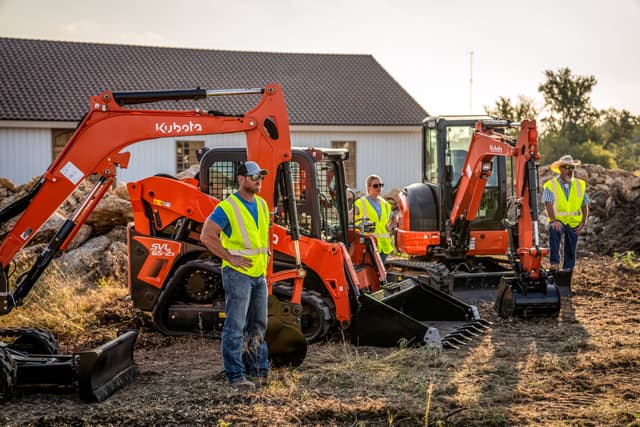
Construction jobs come in all shapes and sizes, and choosing the right equipment can make a major difference in how efficiently the work gets done. From digging and grading to material handling and site preparation, Kubota construction equipment is designed to handle a wide range of demanding applications.
The right machine depends on the job, the size of the project, the available space, the materials you need to move, and how often you expect to use the equipment.
What Types of Kubota Construction Equipment Are Available?
Kubota offers several types of construction equipment, with each machine designed for different applications.
Depending on the job, you may be looking at:
The best machine isn't necessarily the biggest or most powerful one. It's the machine that gives you the capability you need while fitting the job site and your workload.
Kubota Mini Excavators
Mini excavators are designed for digging, excavation, trenching, and other jobs where maneuverability is important.
They can be useful for:
One of the biggest advantages of a mini excavator is its ability to work in relatively tight spaces.
For contractors working in residential areas or on smaller construction sites, that maneuverability can be extremely valuable.
The size of mini excavator you need depends on the depth and size of the excavation, the materials you're working with, the available space, and the attachments you plan to use.
Kubota Skid Steer Loaders
Skid steer loaders are compact, maneuverable machines that can perform a wide variety of construction, landscaping, and material-handling jobs.
A skid steer can be used for:
- Loading and moving material
- Grading
- Site preparation
- Landscaping
- Clearing debris
- Construction work
- Moving dirt and gravel
- Operating different attachments
One of the biggest advantages of a skid steer is versatility.
With the right attachment, the same machine can perform very different jobs. That makes skid steers popular with contractors and businesses that need one machine capable of handling multiple applications.
Kubota Compact Track Loaders
Compact track loaders provide many of the same general capabilities as skid steer loaders but use tracks instead of wheels.
The tracks can provide advantages when working on soft, muddy, uneven, or sensitive surfaces.
Compact track loaders can be useful for:
- Grading
- Landscaping
- Site preparation
- Material handling
- Brush clearing
- Construction work
- Working on soft ground
The choice between a skid steer and compact track loader often comes down to the surfaces you work on, the type of jobs you perform, and the conditions at your job sites.
Kubota Wheel Loaders
Wheel loaders are designed for heavier material-handling applications.
They can be used to move materials such as:
- Dirt
- Gravel
- Sand
- Mulch
- Stone
- Construction debris
Wheel loaders can be especially useful for contractors, municipalities, rental businesses, and other operations that regularly move large quantities of material.
Their size and configuration can make them well suited for larger job sites and material-handling applications where a smaller loader may not provide enough capacity.
Choosing Construction Equipment Based on the Job
The best way to choose construction equipment is to start with the work.
Don't start by asking, "Which machine should I buy?"
Start by asking, "What do I need this machine to do?"
If You Need to Dig
A mini excavator may be the logical starting point.
Excavators are designed around digging and excavation, making them useful for trenches, drainage, utility work, foundations, and other projects where digging is the primary task.
If You Need to Move and Grade Material
A skid steer or compact track loader may be a better fit.
These machines can handle material movement, grading, loading, and a variety of other construction and landscaping tasks.
If You Work on Soft or Uneven Ground
A compact track loader may provide advantages over a wheeled machine.
Tracks can provide additional flotation and traction in certain conditions, making them useful on muddy or soft job sites.
If You Move Large Amounts of Material
A wheel loader may make more sense.
When material handling is a major part of the job, loader size and capacity become increasingly important.
How Attachments Make Construction Equipment More Versatile
The machine is only part of the equation.
Attachments can significantly expand what a piece of construction equipment can do.
Depending on the machine, attachments can be used for applications such as:
- Digging
- Grading
- Brush clearing
- Material handling
- Demolition
- Landscaping
- Snow removal
- Site preparation
This versatility is one reason contractors often choose equipment that can work with multiple attachments.
Before purchasing a machine, make a list of the attachments you expect to use. Then make sure the machine has the hydraulic capability, operating capacity, and other specifications needed to run those attachments properly.
How Big of a Construction Machine Do I Need?
Bigger isn't always better.
The right size depends on several factors.
Job Size
A small residential project may not require the same equipment as a large commercial construction site.
Digging Depth
If you're considering an excavator, determine how deep you need to dig and how much material you expect to remove.
Operating Space
Job sites can be crowded. A machine that is too large may be difficult to maneuver around buildings, utilities, landscaping, or other obstacles.
Material Weight
If you're regularly moving heavy materials, loader capacity becomes an important consideration.
Ground Conditions
Think about whether you'll primarily work on paved surfaces, firm ground, mud, loose soil, slopes, or uneven terrain.
Transportation
Don't forget about getting the machine to and from the job site.
The size and weight of the equipment can affect what trailer and towing setup you need.
Should You Buy or Rent Construction Equipment?
The right answer depends on how you use the machine.
If you use a particular machine regularly, owning it may make more sense because you have the equipment available when you need it.
For occasional projects, renting can sometimes be a practical option.
Businesses also need to consider utilization, transportation, maintenance, financing, and the potential revenue the machine can generate.
If you're trying to determine whether purchasing a machine makes sense for your operation, consider how many hours you realistically expect to put on it each year.
Construction Equipment for Contractors
Contractors often need equipment that can handle multiple types of work.
A landscaping contractor may need equipment for grading, material handling, clearing, and site preparation.
A plumbing contractor may need an excavator for trenching and utility work.
A grading contractor may need equipment designed around moving and leveling large quantities of material.
The right machine depends on the type of contracting work you perform.
Rather than choosing equipment based solely on horsepower or purchase price, consider how the machine will fit into your day-to-day operation.
Construction Equipment for Rental Businesses
Equipment rental businesses have different considerations.
Rental equipment needs to be versatile, durable, and useful to a wide range of customers.
Machines that can handle multiple applications may provide additional value because they can serve more types of rental customers.
Equipment selection also needs to account for transportation, maintenance, serviceability, and the types of projects common in the rental market.
Construction Equipment for Municipalities
Municipalities may use construction equipment for roads, drainage, parks, facilities, utilities, and other public projects.
The right equipment can help crews perform maintenance and construction work efficiently without relying entirely on outside contractors.
Municipal equipment decisions may also involve operator needs, storage, service requirements, and long-term operating costs.
How to Choose the Right Kubota Construction Equipment
Before purchasing construction equipment, make a list of the jobs you expect the machine to perform.
Then consider:
What is the primary job?
Identify the task you'll perform most often.
What other jobs will the machine need to handle?
Versatility can be valuable if you need one machine to perform several types of work.
What attachments will you use?
Make sure the machine is compatible with the attachments you need.
What are the job-site conditions?
Consider terrain, ground conditions, available space, and access.