
Kubota Residential vs. Commercial Zero-Turn Mowers: What’s the Difference?
8/18/2026
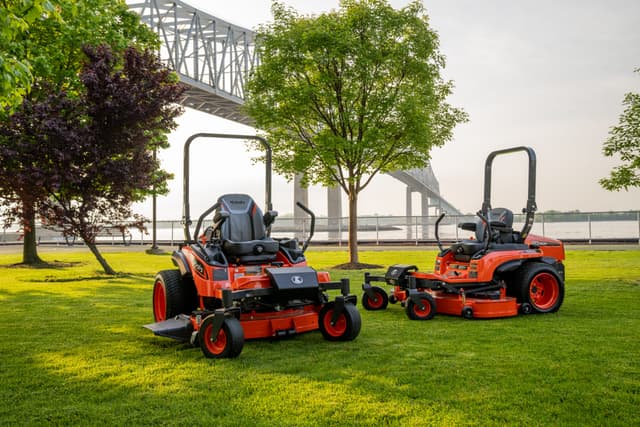
When you're comparing a Kubota residential vs commercial zero-turn mower, one of the biggest questions is which type is right for your needs
The answer isn't simply based on how many acres you mow.
A homeowner with a large property may want a commercial-grade machine, while someone with a smaller yard may be perfectly happy with a residential model. A landscaping contractor, on the other hand, typically needs a mower designed to handle frequent use and long hours.
Kubota offers zero-turn mower options for both residential and commercial applications. Understanding the differences can help you choose the right machine for the work you actually do.
A residential zero-turn mower is designed primarily for homeowners and property owners who mow their own lawns.
That doesn't mean residential machines aren't capable. It means they're designed around the needs of someone who typically mows their property on a regular basis rather than operating the mower commercially all day.
Kubota's Z200 Series is a good example.
The Kawasaki-powered models we're focusing on at Sink Farm Equipment include:
These provide 42-, 48-, and 54-inch deck options for homeowners with different property layouts and mowing needs.
A residential zero-turn can be a great fit if you're mowing your own property and want the speed and maneuverability of a zero-turn without stepping into a larger commercial machine.
A commercial zero-turn mower is designed for more demanding use.
Professional landscapers may operate their mowers for several hours a day, multiple days a week. That means durability, operator comfort, productivity, and serviceability become much more important.
Kubota's Z700 Series is built for this type of application.
For Sink Farm Equipment customers, we're specifically focusing on the Kawasaki-powered Z781 models:
The Z781 gives professional operators larger deck options and a machine designed for serious mowing workloads.
The biggest difference isn't necessarily cutting width.
It's how the mower is designed to be used.
A residential mower may spend a few hours mowing a property each week.
A commercial mower may spend several hours mowing every day.
That difference affects nearly everything about the machine.
Commercial mowers are generally built with heavier-duty components and features intended to withstand higher levels of use.
For a homeowner who only mows once a week, some of that additional capability may not be necessary.
For a professional landscaper, it can be critical.
This is one of the first questions you should ask yourself.
If you're mowing your own property once a week, a residential Kubota zero-turn may be all you need.
The Z200 Series provides multiple deck sizes so you can choose a machine based on your property layout and mowing conditions.
If you own a large property and spend substantial time mowing, you may want to consider stepping up to a higher-level machine.
You're putting more hours on the mower, which makes durability and operator comfort increasingly important.
If you're mowing commercially, a commercial machine deserves serious consideration.
The mower isn't just equipment you're using for a hobby. It's a tool that's producing revenue.
Downtime, productivity, and operator fatigue can directly affect your business.
You don't have to be a landscaper to buy a commercial zero-turn.
A homeowner with a large property who spends several hours each week mowing may appreciate the durability, comfort, and capabilities of a commercial machine.
The question is whether those additional capabilities are worth the investment for your particular situation.
If you're mowing a few acres once a week, you may not need a Z781.
If you're maintaining a large estate, farm, or property with extensive turf and putting significant hours on the mower, the equation changes.
Deck size is important for both residential and commercial mowing.
Kubota offers zero-turn decks ranging from 42 to 72 inches, depending on the series.
Residential buyers may find 42-, 48-, or 54-inch decks to be a good fit.
Commercial operators may benefit from 54-, 60-, or larger decks when mowing large, open areas.
But don't automatically choose the largest deck.
If you're constantly maneuvering around trees, landscaping, fences, and buildings, a smaller deck may actually be more productive.
Your property layout should determine your deck size.
A residential Kubota zero-turn may be the right choice if:
The Z200 Series is a natural starting point for this type of customer.
The Z400 Series can also be worth considering when you want to step up in performance, features, and deck-size options.
A commercial Kubota zero-turn may be the better choice if:
The Z781 is particularly relevant for professional operators looking for a Kawasaki-powered commercial zero-turn.
The Kubota ZG Series deserves consideration as well.
The ZG lineup offers compact zero-turn mower options with 48-, 54-, and 60-inch deck configurations.
It's another option to consider when comparing Kubota zero-turn mowers based on your property, mowing conditions, and desired features.
The ZG Series can fit into situations where a customer wants something beyond a basic residential mower but doesn't necessarily need to jump straight into a large commercial machine.
The Kubota ZD Series takes a different approach from the gasoline-powered Z200, Z400, ZG, and Z700 models.
ZD mowers use Kubota diesel engines and are available with larger deck configurations, including 60- and 72-inch options on applicable models.
The ZD Series is particularly relevant for customers looking for diesel power and professional-level mowing capability.
For large properties, commercial mowing, farms, municipalities, and other demanding applications, the ZD Series deserves a look.
Not necessarily.
It's better for certain applications.
A commercial mower may be overkill for someone mowing a small residential lawn once a week.
Likewise, a residential mower may not be the best tool for someone operating a landscaping business and putting hundreds of hours on a machine.
The right mower is the one that matches the workload.
Commercial zero-turn mowers generally cost more than residential machines.
That's because you're paying for more than cutting width.
You're also buying a machine designed around heavier use, increased durability, operator comfort, and productivity.
The important question isn't simply:
"Which mower costs less?"
Instead, ask:
"Which mower makes the most sense for the work I need it to do?"
Buying more mower than you need doesn't necessarily make financial sense.
But buying a machine that isn't built for your workload can become expensive if you experience excessive wear, downtime, or need to replace the mower sooner than expected.
Here's a simple starting point:
Z200 Series: A strong option for homeowners looking for a residential zero-turn mower.
Z400 Series: A step up for homeowners and property owners looking for additional performance, features, and larger deck options.
ZG Series: A compact zero-turn option with multiple deck configurations.
Z700 Series: A commercial-grade option, with the Z781 Kawasaki models being particularly relevant for professional mowing.
ZD Series: A diesel-powered option for customers looking for larger, professional-level zero-turn mowing capability.
The best choice depends on your property, mowing frequency, deck-size requirements, and how many hours you'll put on the machine.
You don't need a commercial mower simply because you have a large yard.
You also shouldn't buy a residential mower simply because you're a homeowner.
Think about how often you mow, how many hours you put on the machine, how much open grass you maintain, and how important productivity and operator comfort are to you.
Then compare the Kubota series that best matches those needs.
At Sink Farm Equipment, we can help you compare Kubota residential and commercial zero-turn mowers and determine which machine makes sense for your property or business.
Whether you're a homeowner, landowner, farmer, contractor, or professional landscaper in the Lexington, NC area, stop by Sink Farm Equipment and let us help you find the right Kubota mower for the job.