
Mini Excavator vs Skid Steer: Which One Do You Need?
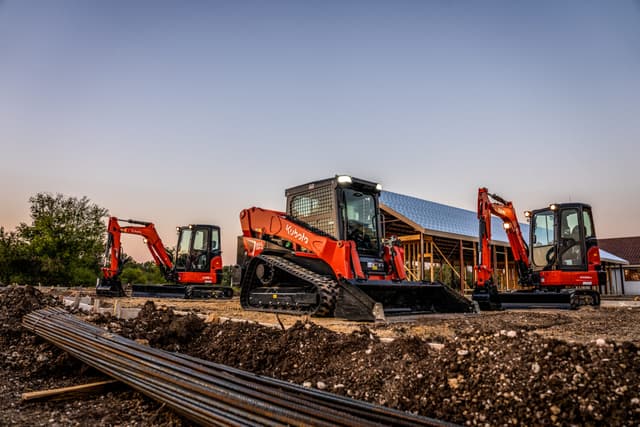
Excavator vs skid steer is a common comparison for contractors, landscapers, farmers, and property owners trying to choose the right construction machine for the job. It's which machine is better for the jobs you need to perform.
A mini excavator is designed primarily for digging and excavation, while a skid steer is generally better suited for loading, grading, material handling, and jobs that require a variety of attachments.
For contractors, landscapers, farmers, property owners, rental businesses, and municipalities, understanding the difference can help you choose equipment that fits the work.
At Sink Farm Equipment, we help customers throughout the Lexington, NC area compare Kubota equipment and find machines that fit their specific applications.
Mini Excavator vs Skid Steer: What's the Difference?
The biggest difference is how each machine is designed to work.
A mini excavator uses a boom, arm, and bucket to dig below and around the machine. This makes it especially useful for excavation, trenching, drainage, and utility work.
A skid steer uses a loader-style design and is particularly useful for moving material, grading, loading, and operating a wide range of attachments.
Both machines can perform multiple jobs, but they approach those jobs differently.
Skid Steer vs. Compact Track Loader
Although the terms are sometimes used interchangeably in conversation, a skid steer loader and compact track loader are different machines.
A skid steer loader runs on four wheels. Kubota's skid steer loaders use the SSV model designation. Wheeled skid steers can be a strong choice on hard and abrasive surfaces where the maneuverability of a skid steer is useful.
A compact track loader runs on rubber tracks. Kubota's compact track loaders use the SVL model designation. Tracks provide additional traction on soft, sandy, muddy, or uneven surfaces and distribute the machine's weight over a larger area.
For many contractors comparing a mini excavator with a “skid steer,” a compact track loader may actually be the loader they're considering.
The basic buying decision remains similar: choose the excavator when digging is the priority and the loader when material handling, loading, grading, and attachment versatility are the priority.
Mini Excavator vs. Skid Steer: Which Is Better?
A mini excavator is generally the better choice when digging and excavation are the primary jobs, while a skid steer or compact track loader is generally better for loading, carrying material, grading, and jobs that require frequent attachment changes.
Choose a mini excavator if your work primarily involves:
Choose a skid steer or compact track loader if your work primarily involves:
What Is a Mini Excavator Best For?
Mini excavators are built around digging.
They can be useful for:
The boom and arm allow an excavator to dig below the machine and reach areas that may be difficult for a loader-style machine to access.
If digging is the primary job, a mini excavator is often the logical starting point.
What Is a Skid Steer Best For?
Skid steers are designed for versatility and material handling.
They can be used for:
A skid steer can be especially useful when your work involves moving material and switching between different attachments.
Which Machine Is Better for Tight Spaces?
Both machines can be useful in confined areas, but the specific dimensions of the machine matter.
Mini excavators are often particularly useful on residential job sites because they can provide excavation capability while taking up less room than a larger excavator.
Skid steers can also work in relatively tight spaces, especially compact models.
Before choosing either machine, measure the areas where you'll be working and consider access through gates, around buildings, and between other obstacles.
Which Machine Is More Versatile?
This depends on how you define versatility.
A skid steer is highly versatile because it can use many different attachments for grading, material handling, landscaping, clearing, and other jobs.
A mini excavator can also be equipped with different attachments, but its primary strength remains excavation and digging.
If you need one machine to perform a wide variety of loader-style jobs, a skid steer may have the advantage.
If you need one machine primarily for excavation but want additional capabilities, a mini excavator may be the better choice.
Mini Excavator vs Skid Steer Attachments
Attachments can make either machine significantly more useful.
Mini Excavator Attachments
Depending on the machine, excavator attachments can be used for:
- Digging
- Trenching
- Breaking
- Grading
- Brush clearing
- Other specialized excavation work
Skid Steer Attachments
Skid steers can be equipped with attachments for applications such as:
- Grading
- Material handling
- Brush cutting
- Landscaping
- Snow removal
- Post-hole digging
- Sweeping
- Other construction and property-maintenance jobs
If you already know which attachments you need, that information should play a major role in your machine decision.
Mini Excavator vs Skid Steer for Contractors
Contractors should choose based on their most common jobs.
A plumbing or utility contractor who spends most of the day trenching may get more value from a mini excavator.
A grading or landscaping contractor who moves large amounts of material may benefit more from a skid steer.
A general contractor may have applications for both.
If your business regularly performs both excavation and material-handling work, owning or renting both types of equipment may make sense depending on your workload.
Mini Excavator vs Skid Steer for Landowners
Landowners may have different priorities than commercial contractors.
If you primarily need to dig drainage, remove stumps, dig for landscaping projects, or perform excavation, a mini excavator can be extremely useful.
If you need to maintain driveways, move gravel, clear brush, grade property, and move materials, a skid steer may provide more versatility.
Think about the jobs you expect to perform over the next several years rather than choosing based on a single project.
Should I Buy a Mini Excavator or Skid Steer?
Start by making a list of your most common jobs.
Then ask:
Do I need to dig?
If excavation and trenching are major parts of the work, look closely at mini excavators.
Do I need to move material?
If loading and moving dirt, gravel, mulch, or debris are major tasks, a skid steer may be a better fit.
Do I need to grade?
Skid steers can be particularly useful for grading and leveling applications.
How many attachments will I use?
If you plan to switch between several loader-style attachments, a skid steer may provide the versatility you need.
How much space do I have?
Consider access to the job site, working areas, and transportation requirements.
How often will I use the machine?
Frequent use may justify owning the machine that best fits your typical work.
Can You Have Both?
For some contractors and businesses, the answer is yes.
A mini excavator and skid steer can complement each other because they excel at different types of work.
For example, a contractor could use the mini excavator to dig a trench and then use the skid steer to move material and grade the area.
Having both machines can allow a crew to complete more work without constantly changing equipment.
Of course, owning multiple machines isn't necessary for every business. Utilization, project volume, transportation, financing, and operating costs should all be considered.
Buy or Rent?
If you only need one machine for an occasional project, renting may make sense.
If the equipment will be used regularly as part of your business, purchasing may provide more value and availability.
Consider how often you expect to use the machine, what types of jobs you'll perform, and how the equipment fits into your overall operation.
How to Choose the Right Machine
The best way to choose between a mini excavator and skid steer is to focus on your actual work.
If your primary jobs involve:
Digging, trenching, drainage, and excavation:
Start by looking at mini excavators.
Grading, loading, and material handling:
A skid steer may be the better fit.
A combination of excavation and material handling:
You may benefit from having access to both types of machines.
The goal isn't to buy the machine with the most horsepower or the most attachments. It's to choose equipment that helps you complete your work efficiently.
Can a Skid Steer Replace a Mini Excavator?
A skid steer or compact track loader can perform some digging work with the right attachment, but it does not completely replace a mini excavator.
If you occasionally need to dig a shallow trench or perform light excavation, an attachment may allow a loader to handle the job without adding another machine.
When excavation becomes a regular part of the work, however, a mini excavator provides a machine specifically designed around digging.
The same is true in the opposite direction. A mini excavator can move material and perform some grading, but it isn't a direct replacement for a loader when the job involves repeatedly carrying material, loading trucks, handling pallets, or moving quickly around a job site.
For contractors who eventually own both machines, the two can complement each other well: the excavator digs and the loader moves the material.
Sink Farm Equipment Can Help You Compare Your Options
Choosing construction equipment is a major investment, and the right machine depends on the work you need it to perform.